
Introduction
New product trial sales, cultural and creative customization, medical consumables, equipment accessories, and niche e-commerce products—almost all manufacturers of small-batch plastic parts face the same dilemma: with an output of a few hundred or a couple of thousand pieces, should they directly open injection molds or use 3D printing for mass production?
Many people rely solely on experience to make judgments, either blindly opening molds and spending tens of thousands on mold fees, only to end up with unsold products and losses; or they rely too much on 3D printing, resulting in high costs per unit for thousands of orders and significantly compressed profits.
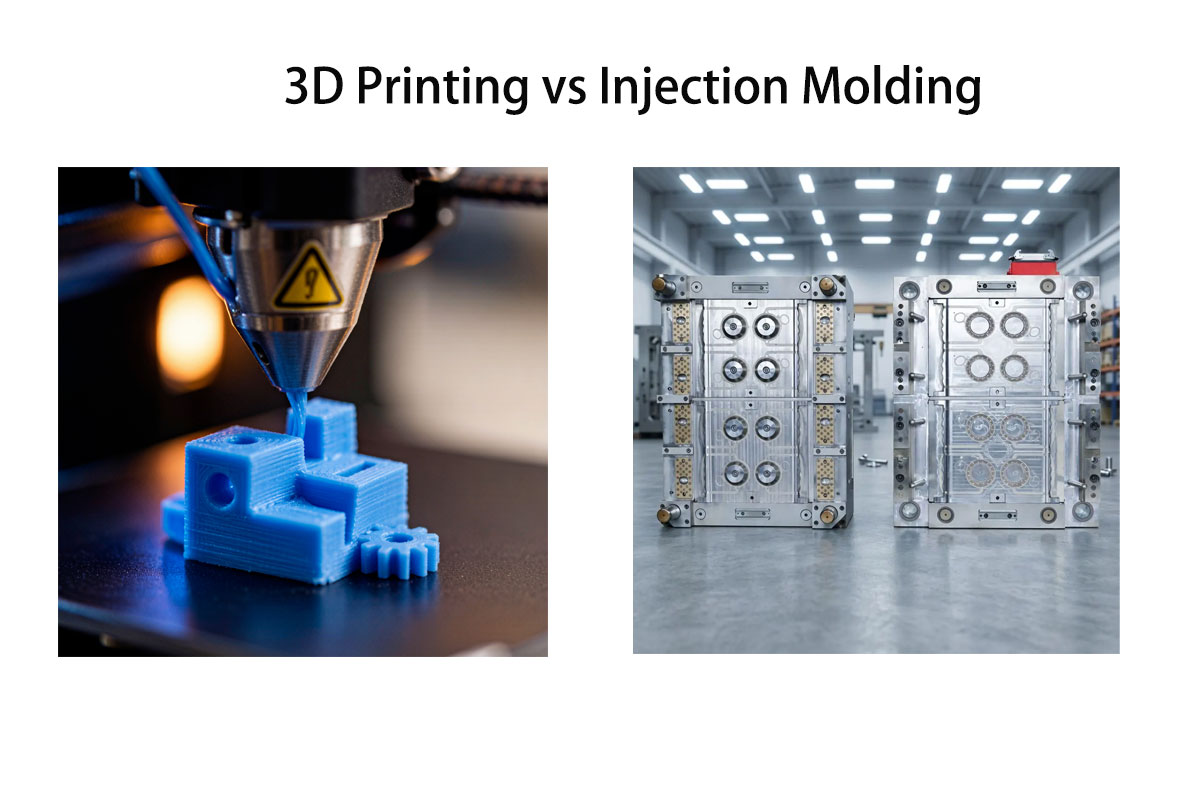
This article thoroughly analyzes the two processes from four dimensions: cost structure, measured data, break-even point, and applicable scenarios. After reading it, you can directly apply it to your own product selection.
Cost Structures of Two Processes
1. Injection Molding (with Mold)
- Core costs: one‑time mold fee + per‑part production cost.
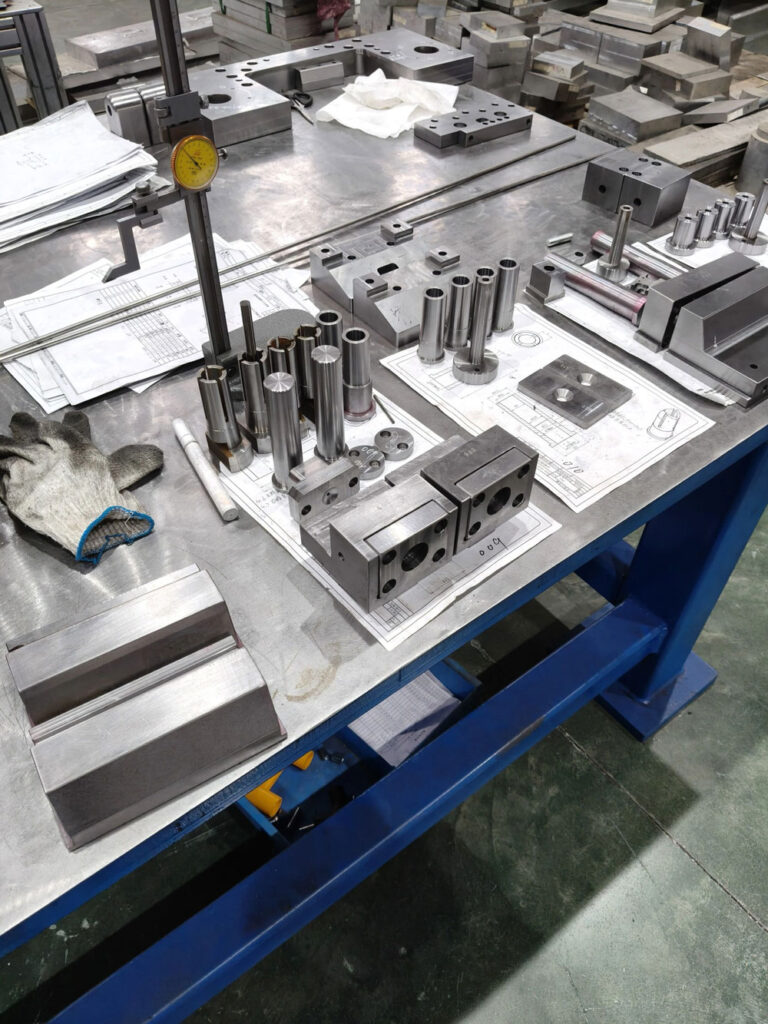
- Fixed cost (mold): design, steel, CNC/EDM, polishing, trial runs & repairs, hot runners, etc.
- Simple mold: $70–110
- Standard P20 steel mold (small/medium enclosures): $200–700
- High‑precision S136/H13 mold: $700–2,800; complex multi‑slide or two‑color molds can reach $10,000+
- Variable per‑part cost: material, machine electricity, labor, finishing.
- Small ABS/PP parts: $0.07–0.70 each; above 10,000 pcs, can drop below $0.05.
- Feature: high upfront cost, but strong economies of scale – unit price drops sharply with volume.
2. 3D Printing
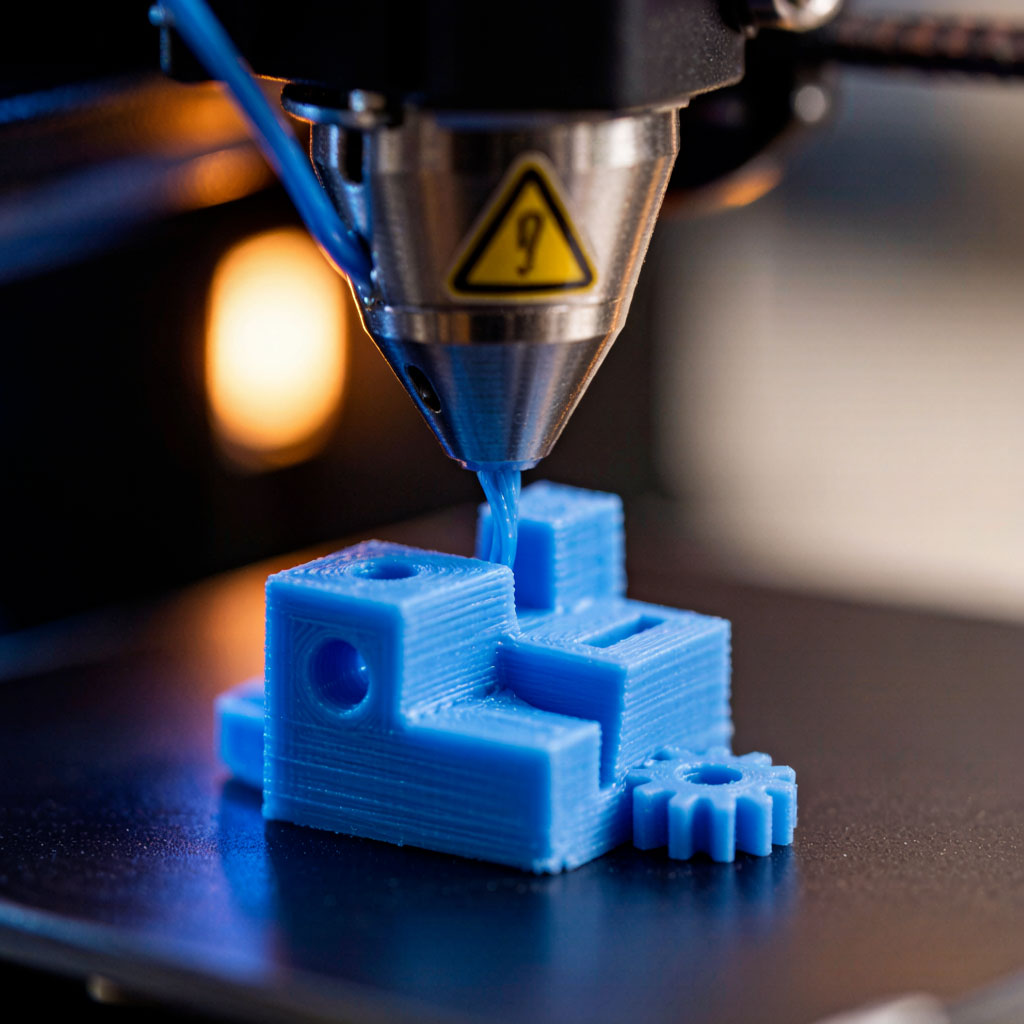
- No mold needed; print directly from CAD. No one‑time tooling cost – all costs are per part.
- Cost includes: machine time, printing material, support material, post‑processing (sanding, polishing, painting).
- Unit price stays nearly flat from 50 to 500+ parts – no significant drop with larger quantity.
- Resin, nylon, PLA filament cost much more than injection raw material – 8–15× higher by weight.
- Feature: zero minimum order, free design changes, but total cost far exceeds injection molding at high volumes.
Comparison Table
| Item | Injection Molding | 3D Printing |
|---|---|---|
| Upfront cost | $70–10,000+ (mold) | $0 |
| Per‑part cost (small ABS/PP part) | $0.05–0.70 (varies with volume) | $0.50–5.00+ (stable, volume‑insensitive) |
| Material cost vs. injection | 1× (baseline) | 8–15× |
| Economies of scale | Strong – unit cost drops sharply | Very weak – unit cost nearly flat |
| Design change cost | High (mold modification) | Zero (edit CAD, re‑print) |
| Minimum order | High (mold investment required) | None (print on demand) |
| Best use case | Large‑volume production (1,000+) | Prototypes, small batches, frequent changes |
Cost Comparison Table of Similar Products
We selected common small electronic product shells on the market, measuring 100×60×20mm, with medium curvature and no complex undercuts, and calculated the total investment for different batches. The data is consistent with the market quotations of mold factories and 3D printing service providers in China.
Set basic parameters:
Injection molding: Mold fee USD 4,200 (standard P20 steel mold), variable cost per injection molding piece USD 0.42/piece.
3D printing (SLA photosensitive resin, finished product after sanding and painting): USD 3.90/piece
Cost Comparison: Injection Molding vs. 3D Printing (SLA)
Product: 100×60×20mm shell, medium curvature, no complex undercuts
Injection molding: Mold fee = $4,200** | Unit cost = **$0.42/pc
3D Printing (SLA, sanded + painted): Unit cost = $3.90/pc
| Batch Size | Total 3D Printing Cost (USD) | Total Injection Molding Cost (Mold + Unit) (USD) | Cost Advantage |
|---|---|---|---|
| 100 pcs | $390 | $4,242 | 3D printing saves $3,852 – overwhelming advantage |
| 300 pcs | $1,170 | $4,326 | 3D printing still 27% of injection cost |
| 500 pcs | $1,950 | $4,410 | 3D printing still cheaper by ~$2,460 |
| 1,000 pcs | $3,900 | $4,620 | 3D printing slightly saves ~$720 (near breakeven) |
| 1,200 pcs | $4,680 | $4,704* (mold $4,200 + 1,200×$0.42) | Break-even point – costs are equal |
| 2,000 pcs | $7,800 | $5,040 | Injection molding overtakes – saves $2,760 |
| 5,000 pcs | $19,500 | $6,300 | Injection molding cost is only 32% of 3D printing |
| 10,000 pcs | $39,000 | $8,400 | Scale advantage becomes decisive |
*Note: The break-even point is approximately 1,200 units. For batches larger than this, injection molding becomes more economical; for smaller batches, 3D printing is significantly more cost-effective.
ey calculation formula: Break-even output = Total mold opening cost ÷ (3D printing unit price – injection molding unit price)
Additional notes on variables:
The larger the product and the more complex the mold (slider, hot runner, high-gloss polishing), the higher the mold cost will be, and the break-even point will be raised to 2,000-5,000 pieces;
For simple molds (only a few hundred trial productions), the mold cost can be reduced to less than USD 1,100, and the break-even point can be reduced to 500-800 pieces;
The unit price of industrial 3D printed Nylon MJF will drop to USD 1.70-2.80, and the break-even point will increase accordingly.
Other considerations besides cost
Many companies only calculate material processing costs, ignoring hidden costs such as time, model changes, quality, and mass production stability, ultimately choosing the wrong solution.
1. Comparison of delivery cycles
3D printing: Delivery within 1–7 days after drawing confirmation, batch printing is carried out simultaneously, without waiting for mold processing or trial molding; suitable for urgent sampling and short-term trial sales orders.
Mold making and injection molding: Simple molds take 20–35 days, precision steel molds take 45–90 days, including 3–5 repeated trial moldings and repairs; new products iterate quickly, and short-term trials are not suitable.
2.Product modification costs
3D printing: Modify 3D drawings and reprint directly without additional cost. Suitable for products with unfinished designs and frequent adjustments to appearance and structure.
Injection molds: Cavity modification, reinforcement, wall thickness adjustment, and clip adjustment, each mold repair costs several dozen to over USD 1,400; if the structure is significantly altered, a new mold needs to be made, and all previous investments will be wasted.
3. Product physical properties and appearance
Advantages of injection molded parts: uniform molecular structure, stable tensile, impact, and high temperature resistance properties, and high batch consistency; smooth surface, can be directly made matte, glossy, or textured, and adaptable to mass production product standards; a full range of industrial raw materials including PP, ABS, PA, PC, and biodegradable plastics are available.
Disadvantages of 3D printing: The layered structure has anisotropy, resulting in 30%–60% lower strength than the same injection-molded parts; color difference in large batches and slight fluctuations in precision; unsuitable for heavy-duty, high-temperature, and sealed structural parts; limited selection of materials for some food and medical certifications.
4. Long-term reuse value
Mold lifespan: Ordinary steel molds last for 300,000 to 500,000 cycles and can be repeatedly produced for long-term orders; 3D printing is a single-piece customization, and repeat orders cannot reduce costs.
Recommendation From Gaofeng
1. Calculate the break-even point first, then determine the process
Calculate mold quotes and 3D printed single-piece quotes using formulas, don’t choose based on intuition; since the potential of a blockbuster product is unknown, prioritize 3D printing to test the waters and reduce trial-and-error costs.
2. Phased production reduces entrepreneurial risk
New product stage: 3D print hundreds of samples to test the market; after sales stabilize and break through the equilibrium point, then start mass production with steel molds; optimize the structure in sync with the early printed sample data to reduce later mold repair costs.
3. Choose quality based on the intended use of the product, not just price
For structural load-bearing components, high-temperature resistant medical supplies, and popular e-commerce products, injection molding is preferred even when the product is close to the equilibrium point; for short-term displays, prototypes, and disposable parts, 3D printing offers better value for money.
In short, 3D printing and injection molding are not replacements for each other, but rather complementary processes adapted to different batch sizes.