
Introduction
Disposable lunch boxes are an essential consumable in the food delivery and fast food industries, and the market demand remains high year after year. Their production efficiency, product quality, and service life depend on the selection of injection mold materials and mold configuration.
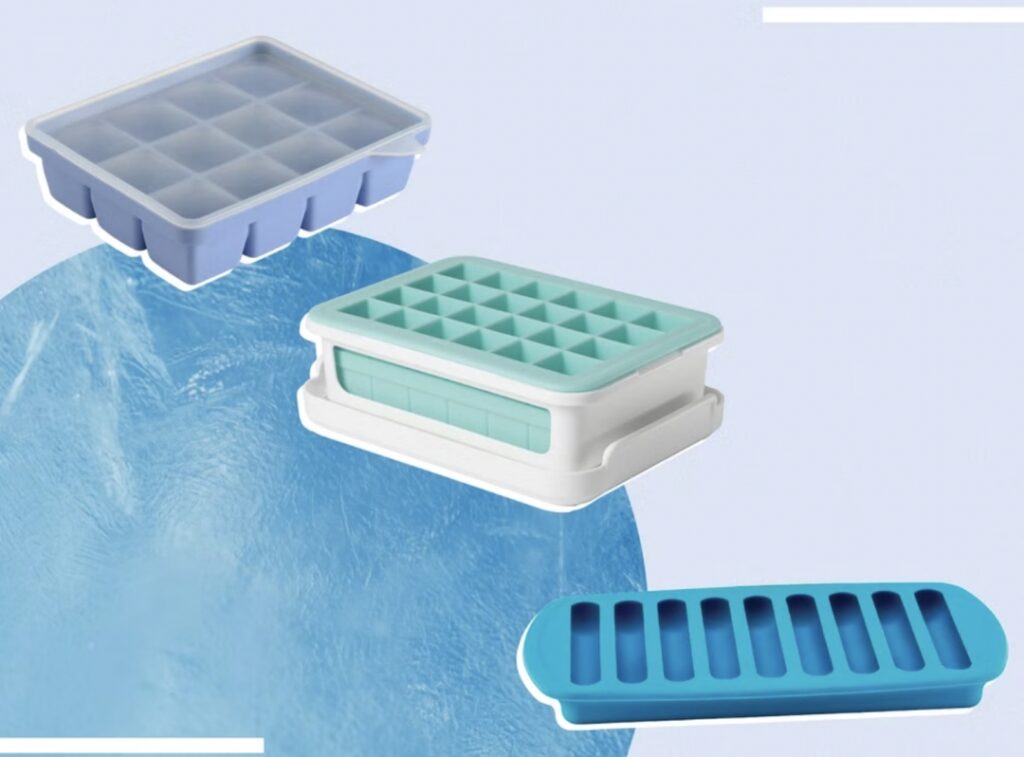
Most disposable lunch boxes on the market are made of food-grade PP (polypropylene), which are thin-walled high-speed injection molded products. The molds need to take into account wear resistance, heat resistance, polishability and food contact safety, while controlling the cost of mold opening and subsequent operation and maintenance.
This guide covers:
- Mold material selection logic
- Comparison of mainstream materials
- Mold cost structure and pricing ranges
Mold Material Selection Principles
Choosing mold material is not about picking the most expensive option—it’s about balancing cost and performance based on three key factors:
1.Production Volume
- Low-volume trial production
- Medium-scale production
- High-volume mass production
Different volumes require different mold lifespans and materials.
2.Product Characteristics
- Standard matte containers
- High-gloss transparent containers
- Leak-proof containers with locking features
- Biodegradable material containers
Each has different requirements for polishing, corrosion resistance, and durability.
3.Injection Molding Conditions
- Thin-wall, high-speed molding
- Hot runner systems
- Continuous 24/7 production
Molds must withstand thermal fatigue, stress, and long production cycles without cracking or excessive wear.
Since these are food-contact products, mold steel must:
- Be free from harmful substance release
- Be easy to polish and clean
- Prevent material residue buildup
Comparison of mainstream mold materials and their applicable scenarios
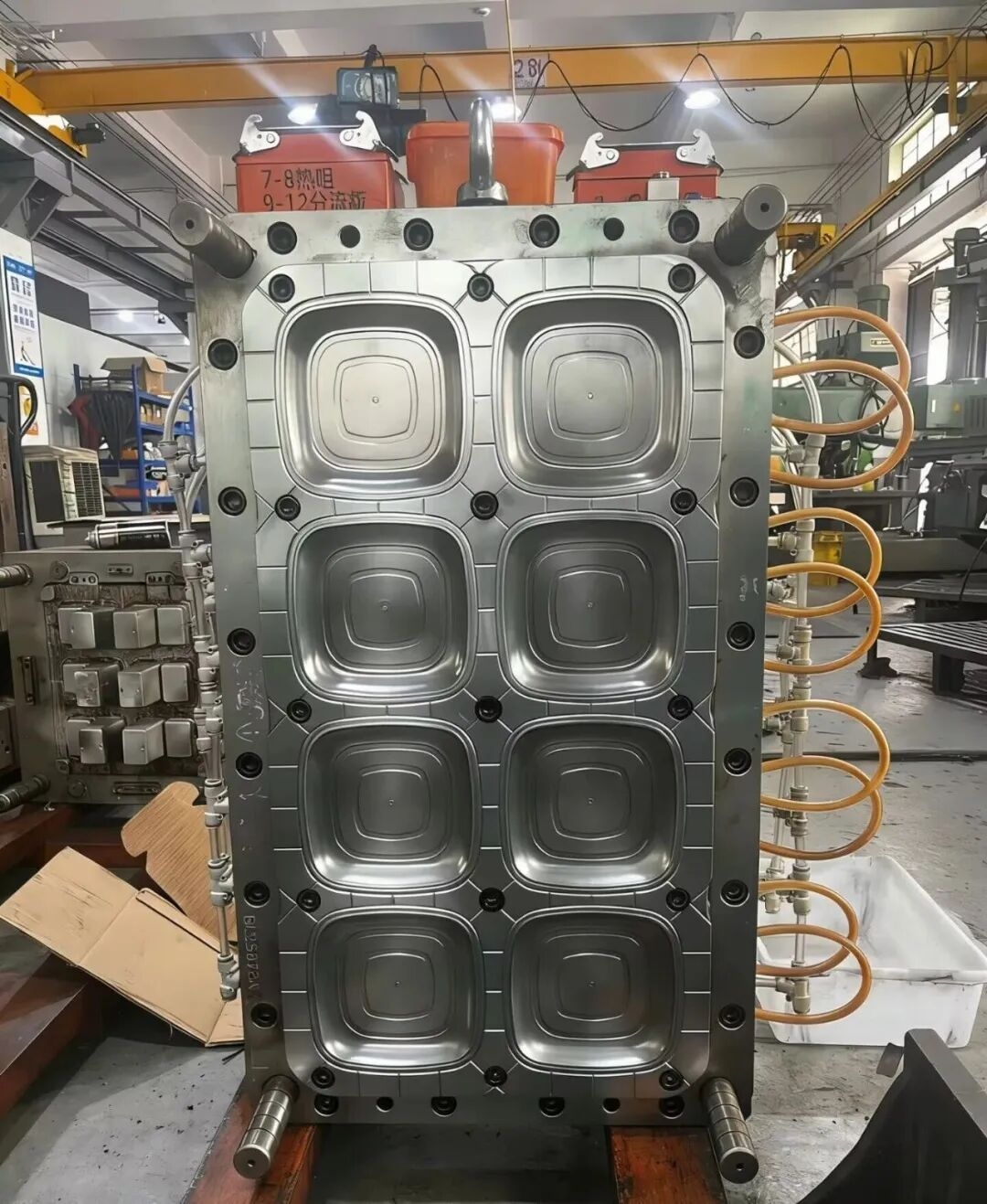
Disposable lunch box injection molds are divided into two parts: mold frame and mold core (cavity, core). The mold frame is mostly made of standard carbon structural steel, while the mold core is the core component. The material selection directly determines the mold life and product quality. The following are the mainstream material selection solutions in the industry.
1. General materials for mold frames
The mold frame mainly serves as a support and positioning element, and does not require high hardness. Therefore, standard materials with high cost performance should be selected first.
S50C/45 carbon structural steel . Extremely low cost, good machinability, and a hardness of 28-32 HRC after quenching and tempering. Suitable for standard racks, meeting the support requirements of most lunchbox molds, and is the industry standard.
Standard mold base finished product. Directly purchase national standard mold bases to save on self-processing costs. The dimensions are accurate and suitable for small and medium-sized lunch box molds, further reducing the overall cost.
2. Mold core materials (graded according to cost-effectiveness and production volume)
(1) Entry-level economic type: P20/718H pre-hardened steel (small batch, low requirements)
Mold life: 100,000-500,000 cycles, suitable for small to medium batch trial production, ordinary matte lunch boxes, and short-term production orders.
Applicable scenarios: Simple square/round lunch boxes without high gloss requirements or locking structures, not suitable for long-term high-speed injection molding.
Advantages: Quick mold making and low cost, suitable for start-up manufacturers to test the market.
(2) Conventional general-purpose type: 2343/2344 hot work die steel (medium to large batches, high-speed mass production)
Mold life: 500,000 to 5,000,000 cycles, suitable for large-scale continuous production, and compatible with hot runner systems.
Applicable scenarios: standard takeout containers and packaging bowls with simple locking structures, and production lines with high daily output.
Advantages: Balances wear resistance and toughness, low maintenance costs, and has the highest overall cost performance. More than 80% of the industry’s large-scale molds use this type of material.
(3) High-gloss transparent type: S136/NAK80 stainless steel (transparent lunch box, high gloss requirement)
Mold life: 500,000-1,000,000 cycles, suitable for the production of mid-to-high-end transparent lunch boxes.
Applicable scenarios: Transparent packaging boxes, food preservation boxes, and high-end food boxes with high requirements for cleanliness and visibility. They are not easily corroded by contact with PP materials containing a small amount of additives.
(4) Corrosion-resistant special type: 2316H stainless steel (biodegradable material, special additives for lunch boxes)
Applicable scenarios: Environmentally friendly and biodegradable disposable lunch boxes; long-term production of specially modified plastic lunch boxes to extend the service life of molds.
Composition of mold opening costs for disposable lunch box injection molds
Mold making costs are not fixed and consist of five main components: material costs, processing costs, design costs, trial molding costs, and profit. The proportions and influencing factors of each component are as follows:
1. Material Costs
Accounting for 20%-35% of the total cost, the core steel is the key material. Imported 2344/S136 is much more expensive than domestically produced materials of the same type, while the cost of the mold frame is relatively fixed.
2. Processing costs
Accounting for 40%-50% of the total cost, this is the largest expenditure item, including CNC precision machining, EDM, wire cutting, polishing, heat treatment and other processes. The more cavities, the more complex the structure, the higher the polishing requirements, the longer the processing time, and the higher the cost.
3. Design Costs
Accounting for 5%-10% of the total cost, the design fee for simple single-cavity/multi-cavity conventional lunch boxes is low. For multi-compartment lunch boxes, those with complex core-pulling/locking structures, and hot runner molds, additional mold flow analysis is required, and the design fee will increase.
4. Trial molding cost
It accounts for 5%-10% of the total cost, including injection molding machine time, PP raw material loss, mold repair and adjustment costs. Conventional molds require 2-3 trial moldings, and complex molds require more trial moldings, which increases costs.
5. Management and Profit
It accounts for 10%-20% of the total cost, and the manufacturer charges according to the order size, payment method, and after-sales warranty. There is more room for negotiation for bulk customization of multiple sets of molds.
2026 Mold Cost Range (USD)
Below are typical prices from major mold manufacturing hubs (e.g., Taizhou, Huangyan), converted into USD:
1, Entry-Level Molds (P20 / 718H, Cold Runner)
- 2-cavity single-compartment mold
$1,700 – $2,800
Mold life: 100k–200k shots - 4-cavity single-compartment mold
$3,500 – $5,500
Best for small-batch production
2, Standard Mass Production Molds (2343 / 2344)
- 4-cavity standard container mold
$7,000 – $11,000
Mold life: 500k+ shots - 6-cavity container/bowl mold
$11,000 – $18,000 - 8-cavity thin-wall high-speed mold
$21,000 – $30,000
3, High-End Molds (Hot Runner / High Gloss / Complex)
- 4-cavity hot runner transparent mold (S136)
$17,000 – $25,000 - 6–8 cavity hot runner high-speed molds
$35,000 – $50,000 - Multi-compartment molds (3 or 4 sections)
$11,000 – $28,000
(30%–50% higher than standard molds due to complexity)
Conclusion
In summary, the core of material selection for disposable lunch box injection molds is “selecting materials according to needs.” 2343/2344 is the industry-standard optimal solution, balancing performance and cost. Mold opening costs vary greatly depending on the number of cavities, configuration, and materials. Basic models can be put into production for tens of thousands of yuan, while high-end mass-production models can cost two to three hundred thousand yuan.
When purchasing molds, it is recommended to compare 2-3 reputable mold manufacturers, and choose a suitable solution based on your own production volume, product positioning and budget. At the same time, pay attention to mold warranty and after-sales mold repair services to ensure long-term stable production.