
Introduction
In metal cutting, there are different workpiece materials. Different materials have different cutting and removal characteristics. How can we master the characteristics of different materials? ISO standard metal materials are divided into 6 different types. Each type has unique characteristics in terms of machinability. This article will summarize them one by one.
Categories Of Metal Materials
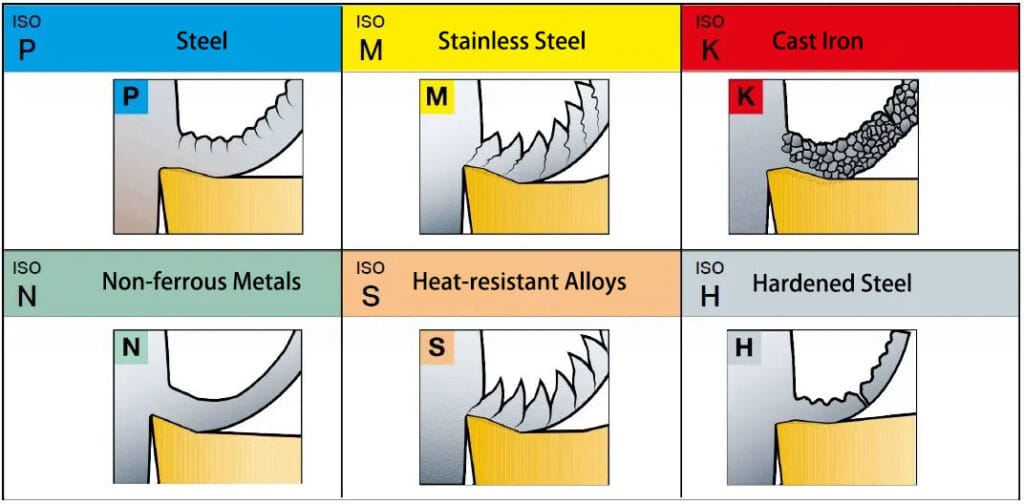
Metal materials are divided into 6 categories:
(1) P-Steel
(2) M-Stainless steel
(3) K-Cast iron
(4) N-Nonferrous metals
(5) S-Heat-resistant alloys
(6) H-Hardened steel
1-P steel
What is Steel?
- Steel is the largest material group in the field of metal cutting.
- Steel can be non-hardened steel or quenched and tempered steel (hardness up to 400HB).
- Steel is an alloy composed mainly of the element iron (Fe). It is produced through a smelting process.
- Unalloyed steel has a carbon content of less than 0.8% and contains only Fe without other alloying elements.
- Alloy steel has a carbon content of less than 1.7% and contains alloying elements such as Ni, Cr, Mo, V, W, etc.
| ISO Class | Material Category | Alloy Content |
|---|---|---|
| P1 | Unalloyed Steel | – |
| P2 | Low-alloy Steel | ≤5% |
| P3 | High-alloy Steel | >5% |
| P4 | Cast Steel | – |
Application: Within the scope of metal cutting, the P group is the largest material group as it covers several different industrial areas.
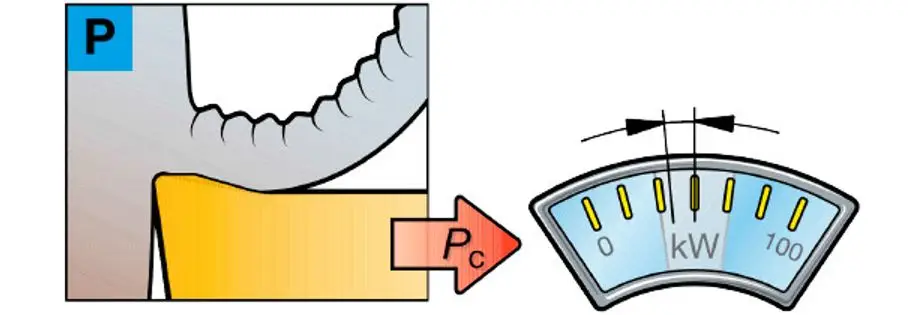
The material is typically long-chipping, forming continuous, relatively uniform chips. The specific chip form is generally determined by the carbon content.
– Low carbon content = tough, sticky material.
– High carbon content = brittle material.
Processing characteristics:
- Long-chipping materials.
- Chip control is relatively easy and smooth.
- Mild steel is sticky and requires a sharp cutting edge.
- Specific cutting force kc: 1500–3100 N/mm²
- The cutting forces and power required to process ISO P materials are within a limited range.
2-M stainless steel
What is Stainless Steel?
- Stainless steel is an alloy material with a minimum of 11-12% chromium.
- Carbon content is usually low (down to 0.01% maximum).
- The alloys are mainly Ni (nickel), Mo (molybdenum) and Ti (titanium).
- Forms a dense layer of Cr2O3 on the steel surface, making it corrosion resistant.
| ISO Class | Material Category | Material Description |
|---|---|---|
| M | P5 | Ferritic/Martensitic Stainless Steel |
| M | M1 | Austenitic Stainless Steel |
| M | M2 | Super Austenitic Stainless Steel, Ni ≥ 20% |
| M | M3 | Duplex Stainless Steel (Austenitic/Ferritic) |
Application: In group M, most of the applications are in oil and gas, pipes, flanges, process industries, and pharmaceutical industries.
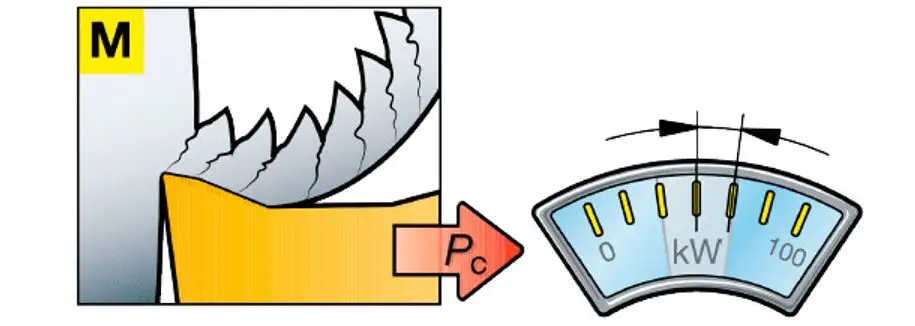
Chip shape: The material forms irregular, flake-like chips, which generate higher cutting forces than standard steels. There are many different types of stainless steel. Chip breaking performance (from easy to nearly impossible) varies depending on the alloy characteristics and heat treatment.
Processing characteristics:
- Long-chipping materials.
- Chip control is relatively smooth in ferrite and more difficult in austenite and duplex.
- Specific cutting force: 1800-2850 N/mm²
- Machining generates high cutting forces, built-up edge, heat and work hardening.
3-K cast iron
What is Cast Iron?
- There are 3 main types of cast iron: grey cast iron (GCI), ductile iron (NCI) and compacted graphite iron (CGI).
- Cast iron is mainly composed of Fe-C with a relatively high silicon content (1~3%).
- Carbon content exceeds 2%, which is the maximum solubility of C in the austenite phase.
- Cr (chromium), Mo (molybdenum) and V (vanadium) are added to form carbides, which increase strength and hardness but reduce machinability.
| ISO Class | Material Category | Material Description |
|---|---|---|
| K1 | K | Malleable Cast Iron |
| K2 | K | Gray Cast Iron |
| K3 | K | Ductile Cast Iron |
| K4 | K | Compacted Graphite Iron |
| K5 | K | Austempered Ductile Iron |
Application: K group is mainly used in automotive parts, machinery manufacturing and ironmaking industries.
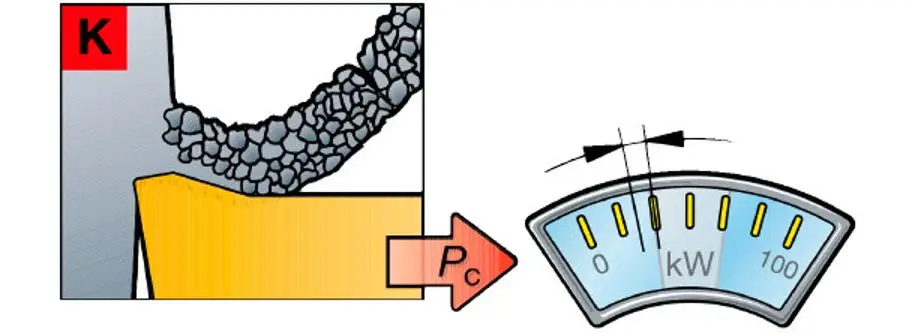
Chip shape: The chip shape of the material varies from nearly powdery chips to long chips. The power required to process this material group is generally less.
*Note: There is a big difference between grey cast iron (which often has chips that are powdery) and ductile iron, which often has chips that are more like steel.
Processing characteristics:
- Short-chipping materials.
- Good chip control in all working conditions.
- Specific cutting force: 790-1350 N/mm²
- Machining at higher speeds produces abrasive wear.
- Medium cutting forces.
4-N non-ferrous metals
What are nonferrous metals?
- This category includes non-ferrous metals, soft metals with a hardness less than 130 HB.
- Non-ferrous metal (Al) alloys containing approximately 22% silicon (Si) make up the largest portion.
- Copper, bronze, brass.
| ISO Class | Material Category | Material Description |
|---|---|---|
| N | N1 | Non-ferrous Metal Based Alloys |
| N | N2 | Magnesium-based Alloys |
| N | N3 | Copper-based Alloys |
| N | N4 | Zinc-based Alloys |
Application: Aircraft manufacturing and aluminum alloy automobile wheel manufacturers occupy a major position in Group N.
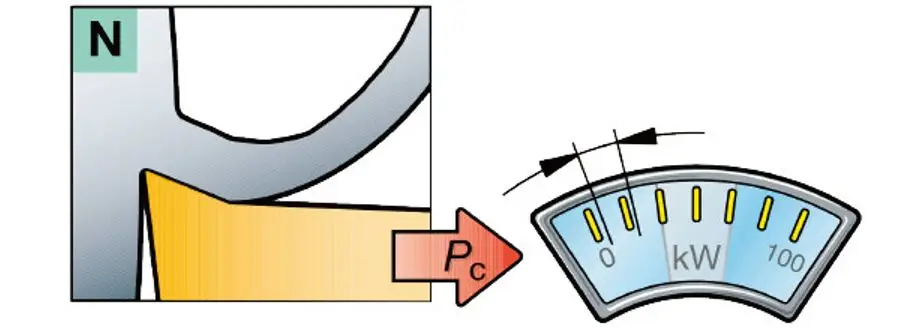
Although the power required per cubic inch is low, it is still necessary to calculate the maximum power required to achieve a high metal removal rate.
Processing characteristics:
- Long-chipping materials.
- In case of alloy, chip control is relatively easy.
- Non-ferrous metals (Al) are sticky and require a sharp cutting edge.
- Specific cutting force: 350-700 N/mm²
- The cutting forces and power required to process ISO N materials are within a limited range.
5-S heat-resistant alloy
What are heat-resistant alloys?
- Heat resistant alloys (HRSA) include a number of high alloy iron, nickel, cobalt or titanium based materials.
Group: Iron-based, Nickel-based, Cobalt-based
Working conditions: annealing, solution heat treatment, aging treatment, rolling, forging, casting.
Features: Higher alloy content (cobalt over nickel) ensures better heat resistance, higher tensile strength and increased corrosion resistance.
| ISO | Material Category | Material Description |
|---|---|---|
| S | S1 | Iron-based Alloys |
| S | S2 | Nickel-based Alloys |
| S | S3 | Cobalt-based Alloys |
| S | S4 | Titanium-based Alloys |
| S | S5 | Tungsten-based Alloys |
| S | S6 | Aluminum-based Alloys |
Application: S group materials that are difficult to process are mainly used in the aerospace, gas turbine and generator industries.
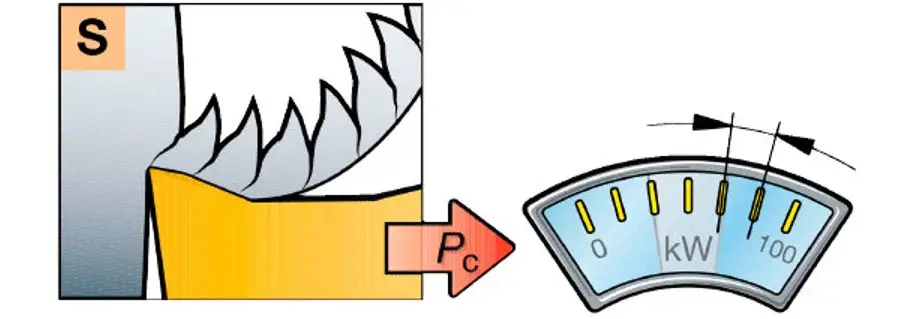
The range is wide, but high cutting forces are usually present.
Processing characteristics:
- Long-chipping materials.
- Difficulty in chip control (serrated chips).
- Use a negative rake angle for ceramics and a positive rake angle for carbide.
- Unit cutting force:
For heat-resistant alloys: 2400–3100 N/mm²
For titanium alloys: 1300-1400 N/mm² - High cutting forces and power required.
6-H hardened steel
What is Hardened Steel?
- From a machining perspective, hardened steels are the smallest grouping.
- This group contains quenched and tempered steels with a hardness >45–65 HRC.
- Typically, the hardness of hard parts being turned ranges from 55 to 68 HRC.
| ISO | Material Category | Material Description |
|---|---|---|
| S | S1 | Iron-based Alloys |
| S | S2 | Nickel-based Alloys |
| S | S3 | Cobalt-based Alloys |
| S | S4 | Titanium-based Alloys |
| S | S5 | Tungsten-based Alloys |
| S | S6 | Aluminum-based Alloys |
Application: Hardened steels in group H are used in various industries, such as the automotive industry and its subcontractors, as well as in the machine building industry and the mold business.
Chip shape: Usually continuous, red hot chips. This high temperature helps reduce the kc1 value, which is important to help solve application problems.
Processing characteristics:
- Long-chipping materials.
- Relatively good chip control.
- Negative rake angle is required.
- Specific cutting force: 2550-4870 N/mm²
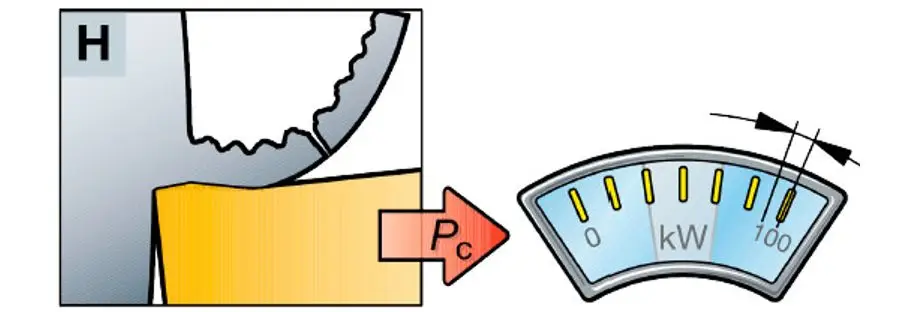
- High cutting forces and power required.