
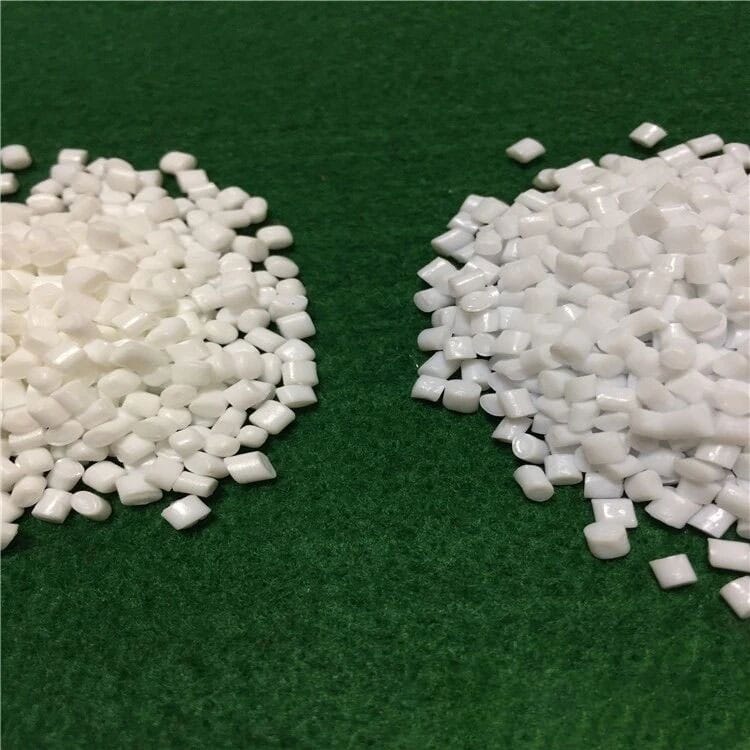
Today, a friend asked about a PBT+30% glass fiber material being produced at 280 degrees Celsius with a drying temperature of 150 degrees Celsius. They were using color powder, and the color was normal during startup, but black streaks appeared on the products after shutdown and restart. They inquired about the cause of these black streaks.
Due to limited information, the specific cause couldn’t be clearly analyzed, but considering the processing conditions, it seems they were operating at their maximum limits, suggesting an unstable process, which explains the problem after shutdown. Below is an introduction to the properties of PBT material for their reference.
I, Overview of PBT Materials
Chemical structure:
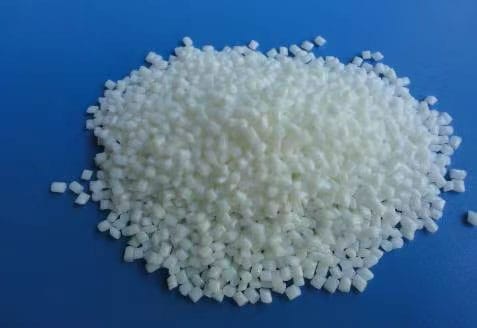
Polybutylene terephthalate (PET ) is a linear saturated polyester. Its molecular chain consists of alternating rigid benzene rings and flexible butanediol chains, which gives it high crystallinity and mechanical strength.
II, PBT Structure and Performance Characteristics
| Feature Dimension | Specific manifestations |
| Crystal structure | It has a crystallinity of 40% , a melting point of 225–245 ° C, and anisotropic shrinkage after molding ( 1.7–2.3 % ) . |
| Mechanical properties | It exhibits high rigidity and excellent wear resistance, but is highly notch sensitive when unreinforced; 30% glass fiber reinforcement significantly improves its impact resistance. |
| thermal properties | Long-term operating temperature: 120 – 140 ℃ (glass fiber reinforced); flame retardant rating: UL94 V-0 |
| Chemical stability | It is resistant to oil and solvents, but easily hydrolyzed at high temperatures (strict drying is required). |
| Electrical performance | High dielectric strength ( >20 kV/mm ), suitable for electronic insulating components. |
| Liquidity | It has low melt viscosity and fluidity second only to nylon, making it prone to “spillage” or “casting”. |
III, Application Areas
- Automotive components: ignition coils, sensor housings, headlight mounts (heat resistant + chemical corrosion resistant)
- Electronic and electrical appliances: Connectors, relays, switches (flame retardant V0 rating + high insulation)
-Industrial parts: gears, pump impellers (wear-resistant + dimensional stability)
-Consumer Products: Power Tool Housings, Fiber Optic Sheaths
IV, Key Parameters of Injection Molding Process
Based on the process characteristics you provided, the following integration and optimization have been implemented:
| Process | Key Control Points |
| Raw material drying | After 4 hours of hot air dehumidification at 120 ℃ , the moisture content is ≤ 0.02%. |
| Injection temperature | 235 – 245 ℃ (below the decomposition temperature of 280 ℃) |
| Injection pressure | 50 – 100 MPa (High pressure significantly improves fluidity) |
| Injection speed | Rapid injection (to avoid incomplete filling due to melt cooling) |
| mold temperature | 70-80 ℃ (temperature difference ≤ 10 ℃), temperatures above 80 ℃ can easily cause demolding deformation . |
| Screw design | Gradual three-stage compression ratio, L/D = 15 – 20 , compression ratio 2.5 – 3.0 ; speed ≤ 80 r/min (recommended 25 – 60 r/min ) |
| Exhaust design | Exhaust channel depth: 0.013 – 0.038mm (to prevent trapped air from burning) |
| Post-processing | Annealing is usually not required; if necessary, heat treatment at 120 °C for 1-2 hours can relieve internal stress. |
V, Key Points of PCR-PBT Recovery Technology
Challenges in the recycling process
Sorting challenges: It is necessary to separate halogenated flame retardants (such as bromine-based ones) to avoid toxic contamination.
Degradation control: Repeated recycling leads to molecular chain breakage and an increase in melt index (viscosity stabilizer required)
2, Process Adjustment
| Process Step | PCR-PBT Treatment Solution |
|---|---|
| Drying | Extend drying time to 6 hours (higher moisture content in recycled material) |
| Injection Molding Temperature | Reduce by 5-10°C (to reduce thermal degradation) |
| Addition Ratio | Virgin material : PCR material = 25-85% : 15-75% (adjust based on product performance requirements) |
| Compatibilizer | Add 0.5-1% epoxy-based compatibilizer to improve interfacial bonding |
3, Performance compensation
- Adding short glass fibers ( 15% ) compensates for the loss of mechanical strength in recycled materials.
- Use chain extenders (such as epoxy resin) to repair broken molecular chains.
VI, Sustainable Development Direction
- Chemical recycling: The alcoholysis process depolymerizes the polymer into monomer BHET , which is then polymerized to generate “primary” PBT .
- Closed-loop design: Automakers / electronics companies establish dedicated PBT component recycling systems (such as connector disassembly and classification).